
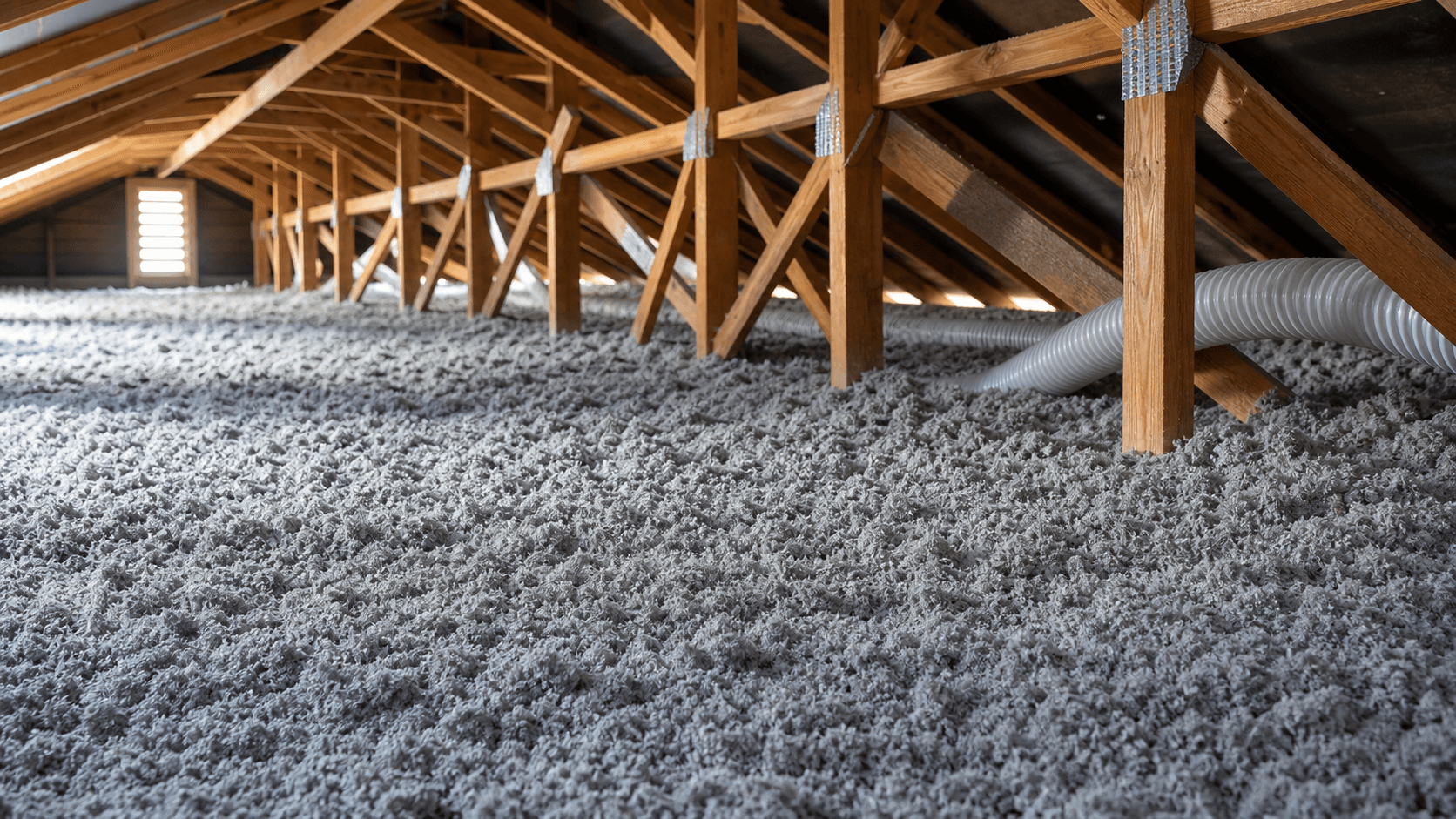
Two practical ceiling options
Jon can quote pumped cellulose or polyester ceiling batts depending on roof-space access, existing insulation, budget and the result you want.

Pumped cellulose or polyester ceiling batts installed with practical roof-space checks, clear scope and a focus on real coverage over brochure promises.
The right ceiling insulation depends on the roof space, existing material, access and target result. The quote starts with those conditions, not a generic square-metre price.
Jon can quote pumped cellulose or polyester ceiling batts depending on roof-space access, existing insulation, budget and the result you want.
A product R-rating only helps when the insulation actually covers the ceiling. The quote focuses on depth, fit, clearances and real roof-space conditions.
The cellulose used for this work is manufactured in South East Queensland by Comfort Zone Insulation Team from recycled paper fibre.
For jobs where batts are the better fit, polyester ceiling batts can be supplied and installed with attention to fit, gaps and access limitations.
Pest, moisture or mould concerns should be dealt with during the roof-space check rather than treated as a promise from insulation alone.
Older roofs often have shifted, compressed or missing insulation. The quote checks whether to top up with cellulose, install batts, remove damaged material or leave serviceable material in place.
Ceiling insulation can contribute to acoustic comfort, but sound transfer depends on the whole ceiling and roof build-up, not the insulation material alone.
A well-covered ceiling helps slow heat moving in and out of the living area, reducing the load on air conditioning and heating where energy savings often start.
Every material still needs correct installation. A careful quote identifies downlights, flues and electrical constraints before install.
The quote does not start by forcing one material. Jon can quote either option and explain which one suits the roof-space conditions, budget and installation constraints.
Pumped cellulose
Pumped loose-fill can suit accessible roof spaces with framing, wiring and irregular areas where continuous coverage is the priority.
Polyester batts
Polyester batts can suit jobs where a batt system is preferred, roof sections are straightforward to fit or removable pieces are useful.
Pumped cellulose
Pumped across the ceiling as a loose-fill layer, so it can flow around many common roof-space interruptions.
Polyester batts
Needs careful cutting, butting and reinstatement so gaps and compression do not undermine the installed result.
Pumped cellulose
Can sometimes top up older material when it is dry, safe and sensible to leave in place.
Polyester batts
Existing or new batts are assessed for condition, coverage, contamination and whether replacement is worthwhile.
Pumped cellulose
Installed with attention to required clearances around heat sources, fittings and roof-space services.
Polyester batts
Also require correct clearances, careful fitting and reinstatement after anyone works in the roof space.
Pumped cellulose
Manufactured locally in South East Queensland from recycled paper fibre by Comfort Zone Insulation Team.
Polyester batts
Quoted by product, R-value and installation scope for the specific home rather than treated as one-size-fits-all.
These sources support the practical insulation principles on this site: R-value, continuous ceiling coverage, settlement allowance, moisture control and safe clearances.
What to expect from the first details you send through to the material recommendation and install-day roof-space check.
Share your suburb, property type, rough ceiling size, ceiling access, preferred material if you have one and any known insulation issues.
Jon reviews the details you send, checks practical constraints where possible and asks follow-up questions if anything needs clarification.
You receive a clear written quote with the recommended insulation option, coverage, assumptions and next steps.
Before installation starts, roof access, existing insulation and practical constraints are checked so any issues can be discussed on the day.
Serving Brisbane and the wider South East Queensland region. Exact travel and scheduling can be confirmed during the quote.
SEQ Insulation is an owner-operated service for homeowners who want a reliable experienced installer and no nonsense advice on cellulose and polyester batt insulation that comes from being in the industry since the 1990s.
Jon first started working in insulation with his dad in the 1990s. He has done other work in between, but his family has stayed continuously involved in the insulation industry for more than 30 years.
For cellulose jobs, the product is manufactured here in South East Queensland by Comfort Zone Insulation Team, the supplier behind insulation.team and a business run by Jon's brother. Polyester batts can also be supplied and installed when they are the better fit for the job. The recommendation is made around the roof space, not one product.
Straight answers on cellulose, polyester batts, roof spaces, existing insulation, safety details and what happens before an install.
Ask about your roofYes. Jon can quote pumped cellulose, polyester ceiling batts or the option that makes the most practical sense after checking the roof space, access and existing insulation.
Cellulose is blown in as loose fibre, so it can form a continuous layer around many framing, wiring and corner details. Polyester batts are fitted pieces, so their result depends on accurate cutting, butting, coverage and reinstatement.
No. R-value matters, but installed coverage is what the house feels. Gaps, compression, missing sections and disturbed insulation can reduce real-world performance, so the installation needs to focus on material depth, fit and roof-space conditions.
Any loose-fill material needs to be installed with the right depth allowance. The practical question is whether the final installed depth gives the coverage the home needs after normal settlement.
Insulation is not a substitute for fixing water entry, poor ventilation or existing moisture problems. If there are leaks, staining or mould concerns, those should be checked before insulation is added.
A roof-space check matters, especially in older homes. Jon looks at access, ceiling condition, existing insulation and practical constraints before recommending cellulose, polyester batts or another approach.
Usually the ceiling is worth getting right first. Better ceiling coverage can reduce the heating and cooling load, which may affect what size system the home really needs.
Yes. The same ceiling layer helps slow heat coming into the home in summer and leaving the home in winter, which is why comfort and power bills are both part of the conversation.
It depends how the garage is used and what sits above or beside it. If it affects bedrooms, living areas or a room used as a workspace, it can be worth including in the quote.
Awkward roof-space details are one reason pumped cellulose can make sense, while some sections may suit batts. The quote checks what can be reached safely and what needs special attention.
Stored items can crush or displace insulation. If roof storage is important, it should be discussed before install so traffic areas and practical limitations are clear.
The aim is to work carefully around existing services, but electrical, antenna or specialist cabling issues may need the relevant trade. Known access issues should be raised during the quote.
Solar panels can shade parts of the roof, but they do not replace a proper ceiling insulation layer. The ceiling still separates the living area from the roof space.
Reflective foil and sarking perform a different job. They can help with radiant heat and weather management, but the ceiling insulation layer still does the main thermal work over the rooms.
Roof ventilation should not be treated as a replacement for ceiling insulation. If there are moisture or ventilation concerns, they should be checked as part of the roof-space assessment.
Timing depends on access, services and ceiling completion. It is best planned before the roof space becomes crowded with later trade work.
Sometimes cold spots and uneven coverage contribute to condensation patterns, but staining can also come from leaks or ventilation problems. The cause needs to be checked rather than guessed.
Sometimes, if the existing material is dry, safe and sensible to leave in place. Damaged, contaminated, wet or badly displaced insulation may need removal or other work before cellulose or polyester batts are added.
No. Removal is a case-by-case decision. The quote looks at condition, coverage, contamination, access and whether topping up will actually solve the problem.
The result depends on safe roof access, clearances around services and correct installation. Pumped cellulose also depends on machine setup and depth control. For most homeowners, professional installation is the practical path.
The insulation is installed inside the roof space, not onto the roof surface. Any tank-water concern should be discussed before work starts so roof access and clean-up expectations are clear.
Both can insulate, but they behave differently. Cellulose is dense loose fibre that can cover irregular spaces well; polyester batts are fitted pieces that rely on accurate placement and staying undisturbed.
No insulation should be sold as magic. CSIRO describes cellulose fibre as pulverised paper combined with fire-retardant chemicals, but correct clearances around heat sources and fittings still matter for every material.
Downlights, flues, transformers and other heat sources need correct clearances. A careful quote identifies those details before installation.
Insulation should not be sold as pest control. If there are rats, insects, entry points or roof-space hygiene problems, those need separate attention before or alongside insulation work.
Yes, but like any roof-space work, trades need to see what they are doing and reinstate disturbed insulation. Clear access and careful work matter.
Different materials carry different moisture, fire, access and removal issues. If foam products are already present, they should be assessed before new insulation is added.
Potential asbestos is not something to work around casually. If asbestos is suspected, it needs the right assessment and safe handling before insulation work proceeds.
Insurance questions should be checked with your insurer. From an installation point of view, the important things are correct material choice, electrical clearances and not hiding known hazards.
Spray foam changes the roof assembly and can create access, moisture and future removal questions. For many Brisbane homes, improving the ceiling insulation layer is the simpler and more serviceable option.
It can if the roof assembly is not designed and installed correctly. Moisture behaviour depends on the product, roof design, ventilation and workmanship.
It can be. Once bonded to surfaces, removal may be much more difficult than moving or replacing loose-fill or batt insulation.
Some foam systems can have odour or curing concerns if specified or installed poorly. That is one reason homeowners often ask for simpler ceiling-based insulation options.
You deal with Jon for the quote and installation communication. The business is being built as a local owner-operated service, not a call-centre sales process.
Not automatically. The real value is the installed result: depth, coverage, access, safety details, clean-up and whether the quote properly accounts for the roof space.
Payment terms can be confirmed with the quote. The important part is that scope, access assumptions and install expectations are clear before work is booked.
The cellulose used for this service is manufactured in South East Queensland by Comfort Zone Insulation Team, the supplier behind insulation.team and a business run by Jon's brother. Polyester batts are quoted separately by product and scope when they are the better fit for the job.
Clear roof-access areas, mention fragile ceilings or known electrical issues, and remove anything that blocks safe access. Jon can confirm the specific preparation after the quote.
No. Area matters, but so do access, current insulation, roof-space obstructions, target depth and safety constraints. The quote should reflect the actual job.
Send the core details and Jon can confirm material options, access, timing and the practical next steps for your roof space.